
Over the last few years, awareness around air quality, workplace safety, and regulatory compliance has increased significantly. AQI levels are monitored daily, audit checklists are well understood, and compliance risks are regularly discussed at leadership levels.
Yet, despite this growing awareness, compliance failures continue to repeat themselves in the form of audit observations, regulatory notices, export rejections, safety incidents, and product recalls.
This leads to a critical question:
If organisations clearly know the risks, why does compliance still fail?
Awareness ≠ Implementation
Most companies today are not unaware of compliance requirements. They know the standards, the acceptable limits, and the consequences of non-compliance.
The problem is that awareness is often mistaken for readiness.
Compliance fails when it is treated as:
- A documentation or certification exercise
- A periodic audit-driven activity
- The responsibility of quality or EHS teams alone
In reality, compliance is not a checklist it is a system-level outcome. Policies, SOPs, and training are necessary, but they cannot succeed in isolation if the physical environment does not support them.
Why Air, Safety, and Quality Issues Remain Unresolved
Air quality concerns, safety lapses, and quality deviations are rarely standalone problems. They are usually symptoms of deeper structural gaps.
Common situations across manufacturing and regulated industries include:
- Clean air being discussed, but uncontrolled environments on shop floors
- Safety procedures defined, but layouts that encourage unsafe movement
- Quality standards documented, but infrastructure that allows contamination or variability
In such setups, teams are forced into continuous firefighting. Even the most capable people struggle when systems work against compliance.
Intent vs Infrastructure: Where Compliance Breaks Down
In most organisations, intent is not the issue. Leadership intent exists, corrective actions are planned, and investments are approved.
The real compliance gap lies between intent and infrastructure.
Many facilities attempt to meet global standards within spaces that were:
- Not designed for controlled operations
- Expanded or modified without compliance-led planning
- Dependent on improvised airflow, filtration, or zoning
When infrastructure does not support compliance, deviations become recurring rather than exceptional.
Reactive Compliance Is the Most Expensive Approach
When organisations address compliance only after issues arise, they enter a reactive cycle:
- Audit observations and corrective actions
- Retrofitting and revalidation
- Operational disruptions and rising costs
Reactive compliance increases long-term risk, drains resources, and creates compliance fatigue across teams.
Preventive compliance, on the other hand, is built into design, engineering, and execution from the start.
Infrastructure as a Compliance Enabler
True compliance is enabled not enforced.
It is enabled by:
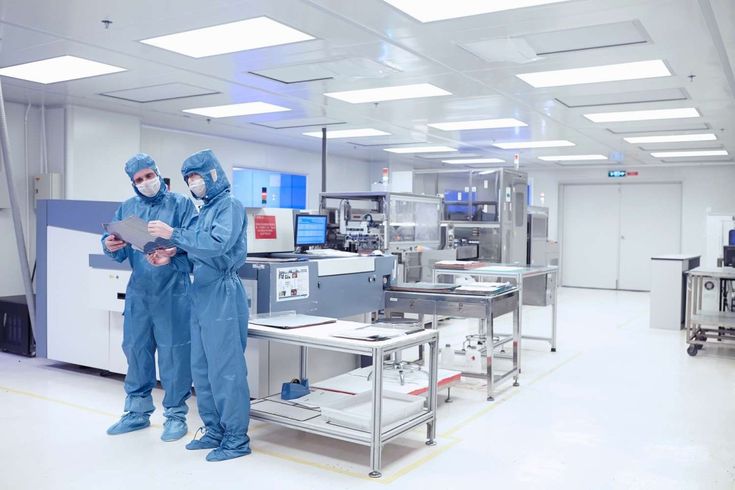
- Controlled environments that support clean air and contamination control
- Engineering designs aligned with regulatory expectations
- Defined zoning and logical material and personnel flow
- Systems that reduce dependency on manual intervention
When infrastructure is right, compliance becomes a natural outcome of daily operations rather than a constant struggle.
How Puretech Cleanrooms & Engineering Bridges the Gap
At Puretech Cleanrooms & Engineering Pvt. Ltd., we address compliance at its root through design-led, infrastructure-driven solutions.
With our own in-house manufacturing unit, we design, manufacture, and execute cleanroom and controlled-environment systems end to end, without dependency on intermediaries. This allows us to maintain direct control over quality, timelines, and compliance-critical details.
Our integrated approach ensures:
- Alignment between design intent and on-ground execution
- Consistent quality of cleanroom components and finishes
- Reduced coordination gaps and execution risks
- Infrastructure that supports long-term compliance, not temporary fixes
Because compliance cannot be sustained if systems are built on fragmented responsibility.
Moving from Knowing to Doing
For organisations serious about compliance, the shift must be from:
“We are aware of the risks.”
To:
“Our infrastructure is designed to prevent them.”
This shift requires early integration of compliance into engineering decisions, layout planning, and environmental control strategies.
The Bigger Picture
Awareness has already done its job. The risks are visible and well understood.
What determines outcomes now is execution.
Compliance does not fail due to lack of knowledge it fails when intent is not supported by systems.
In an environment of increasing regulatory scrutiny, investing in clean, compliant infrastructure is no longer optional it is foundational.
Puretech Cleanrooms & Engineering Pvt. Ltd. partners with manufacturers across pharmaceuticals, healthcare, electronics, food & beverage, and advanced manufacturing to deliver in-house engineered, compliant, and future-ready cleanroom solutions.